The Hidden Cost of Overpricing Your Rental Property
Holding out for an extra $200 per month could cost you thousands in lost rental income. Here's why landlords should consider pricing what tenants will pay.
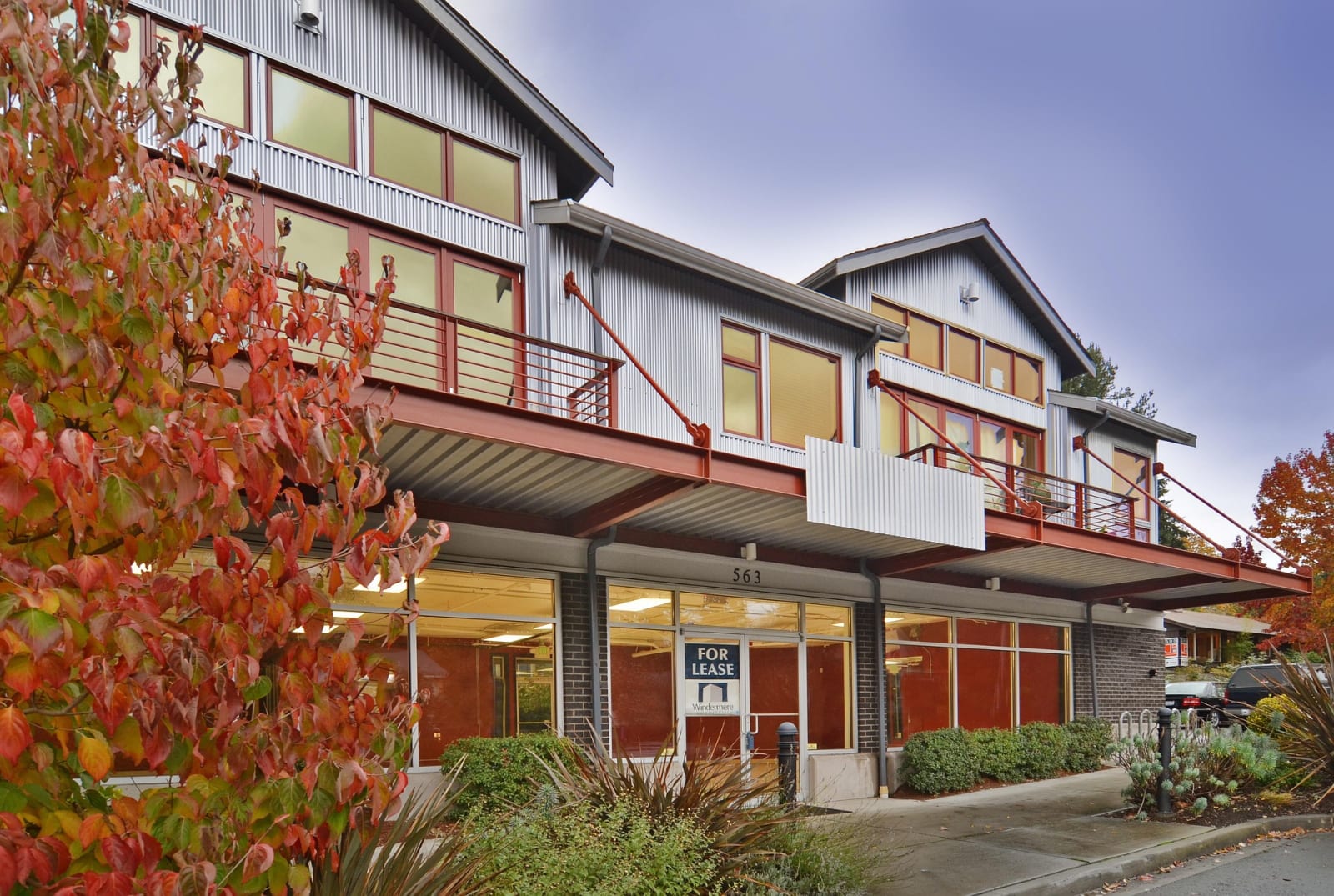
The Cost of an Empty Rental Property: When Asking for More Rent Actually Earns You Less
Something I've noticed when helping landlords rent our their residential units and they still have rental expectations based on the market conditions we experienced around the COVID-19 pandemic (i.e. high prices because of high rental demand).
Obviously nobody wants to earn less from their investment than they could be, especially when property taxes, insurance, maintenance and financing costs have increased.
However, the rental market doesn't necessarily care what a property previously rented for, what the landlord paid for it, or how much the monthly mortgage payment is. Prospective tenants are comparing what's available to them today and deciding where they can get the best value for their money.
Whether you own a single-family rental home, a duplex or an entire apartment building, holding out for a higher rent can sometimes do more financial harm than accepting a slightly lower amount.
The rental market has changed
During the competitive rental market of recent years, landlords could list a property at an ambitious price and still receive inquiries from tenants.
That isn't the case anymore in many areas; you may even find discussions on forums about how it is cheaper to rent in some parts of the GTA than some of the nicer parts of Barrie, Innisfil, and Essa areas.
See below for data from the Canada Mortgage and Housing Corporation (CMHC):
Year | Vacancy rate (apmt/multi-fam in Barrie) |
|---|---|
2021 | 1.9% |
2022 | 2.2% |
2023 | 2.7% |
2024 | 3.4% |
2025 | 4.2% |
While these figures do not cover every type of residential rental property, they provide some insight into how local market conditions have changed.
Employment conditions are also worth considering. As of October 2026, Ontario's unemployment rate stood at ~7%, with employment showing little change for three consecutive months. Job insecurity and financial uncertainty can influence how much families are willing to commit to monthly housing expenses (it's simpler for many to stay with their parents if they can).
The opportunity cost of waiting for higher rent
One of the biggest mistakes, in my opinion, is evaluating a rental property's performance based solely on its monthly rental amount rather than the actual income it generates throughout the year.
Example:
Let's say you own a rental property that previously rented for $2,600 per month. Based on current market conditions, a more realistic rental amount appears to be $2,400.
You have two options:
Continue advertising the property at $2,600 and wait for someone willing to pay that amount.
Advertise it at $2,400 and potentially secure a suitable tenant sooner.
At first glance, reducing the rent by $200 per month might seem like you're giving up $2,400 in annual rental income.
But what happens when we factor in vacancy?
Monthly rent | Scenarios - Months vacant | Rental income over the next 12 months |
|---|---|---|
$2,600 | 0 | $31,200 |
$2,600 | 1 | $28,600 |
$2,600 | 2 | $26,000 |
$2,600 | 3 | $23,400 |
$2,600 | 4 | $20,800 |
$2,400 | 0 | $28,800 |
In this example, even a single month of vacancy would make holding out for the higher rent less profitable in terms of first-year rental income.
If the property sits vacant for three months before eventually renting for $2,600, the landlord collects $5,400 less over that initial 12-month period than if they had rented it immediately for $2,400. And this assumes that someone eventually agrees to pay the higher amount.
If the landlord waits three months and ultimately reduces the rent to $2,400 anyway, they've missed out on $7,200 in potential rental income. This is the opportunity cost, and this is something that I've witnessed in my field.
Why pricing even slightly below market value can sometimes make sense
There is another consideration beyond simply minimizing vacancy: having more applicants to choose from.
Rather than having only one or two applicants to consider, you may find yourself with several suitable options. That gives you more opportunity to conduct proper screening and make an informed decision instead of feeling pressured to accept an applicant because the property has already been sitting vacant for months.
Of course, a lower asking rent does not guarantee a reliable tenant. Proper, consistent and non-discriminatory tenant screening remains essential.
A reliable tenant has financial value too
As a landlord, it's worth asking yourself how much an additional $50, $100 or even $200 per month is really worth.
Would you rather have a tenant paying $2,400 consistently, taking reasonable care of the property and potentially remaining there for several years, or hold out for $2,600 without knowing when you'll find a suitable applicant?
Tenant turnover itself comes with costs that are often overlooked:
Lost rental income between tenancies.
Cleaning, painting and repairs.
Advertising and leasing expenses.
Time spent coordinating showings and reviewing applications.
Utilities and other expenses during periods of vacancy.
A competitively priced property may also give an existing tenant more reason to stay rather than search for a better deal elsewhere.
Sometimes the most profitable decision isn't to extract every possible dollar from a property, but to create the conditions for consistent, predictable rental income.
BUT... don't price too low
There are also legitimate arguments against reducing rent too aggressively. There is a difference between pricing competitively and unnecessarily underpricing your property.
You may have limited ability to increase rent later
Keep in mind that many residential properties are subject to Ontario's rent increase guideline.
Once a tenancy begins, a landlord generally cannot simply increase the rent to market value whenever market conditions improve. For rent-controlled properties, annual increases are generally limited by the provincial guideline (2.1% in 2026 and 1.9% in 2027), subject to certain exceptions.
If you rent out a property for $2,200 when you could have realistically achieved $2,400 without much additional vacancy, that $200 monthly difference could follow you for years, particularly if the tenant intends to stay long-term.
More applicants doesn't necessarily mean better applicants
While pricing slightly below market value can give you more suitable applicants to choose from, pricing significantly below market value can also bring in an excessive number of inquiries and applications (I'll talk about pre-screening in another article, to help you save time).
You'll find you're spending more time reviewing applications, verifying information and following up on concerns regarding previous rental payment history, credit history or inconsistent documentation. Suddenly more people with 7 dogs or extremely poor credit habits start knocking.
It may be harder to increase your asking price
Even if you haven't secured a tenant yet, increasing the advertised rent after realizing you've underpriced the property might be difficult from a marketing standpoint...especially if you list on MLS® with a real estate agent, where everyone review listing history, including previous asking prices.
For example, if you initially advertise a property for $2,200 and quickly realize, based on the amount of interest, that you could reasonably achieve $2,400, increasing the price may create some resistance.
Prospective tenants who have already seen the lower price may question why they're now being asked to pay an additional $200 for the exact same property.
You could negatively affect your property's value
This is particularly important for owners of multifamily properties, where property valuation is often heavily influenced by the income the property generates.
For example, underpricing each unit in a 10-unit apartment building by just $100 per month represents $12,000 in potential annual rental income.
If that translates into $12,000 less in annual net operating income, at an illustrative cap (capitalization) rate of 5%, it could represent a $240,000 difference in the property's income-based valuation, all else being equal.
Let the market give you feedback
If your rental property has been advertised for several weeks and you're receiving very few inquiries, it's worth reassessing your approach.
Compare your property with similar properties that have recently rented, not just those currently advertised (same as when you list something on eBay - you would look at sold listing rather than current listings). Another landlord asking $2,600 does not necessarily mean their property is worth $2,600 in rent, especially if their listing has also been sitting vacant for months.
Consider the property's condition, location, parking, utilities, amenities and competing inventory. Review your photographs, listing description and advertising strategy. If everything else is in order and you're still receiving little interest, pricing may be the issue.
I would rather reassess the price after a few weeks of limited interest than discover three months later that a relatively small price adjustment could have prevented thousands of dollars in lost income.
Final thoughts
Owning an investment property is a business, and pricing should be a business decision rather than an emotional one.
What your property rented for three years ago is historical information. It's useful for understanding how your investment has performed, but it shouldn't dictate what you expect the market to pay today.
I'm not suggesting landlords settle for unsuitable tenants or reduce their rent unnecessarily. Taking the time to find a reliable tenant is important, and there are situations where waiting is entirely justified.
However, there's a significant difference between waiting for the right tenant and waiting because of the wrong price. A rental property generating slightly less monthly rent is often a better investment than one generating no rent at all.
The financial examples in this article are illustrative, assume full rent collection during occupied periods and exclude operating expenses, rent increases and taxes.